
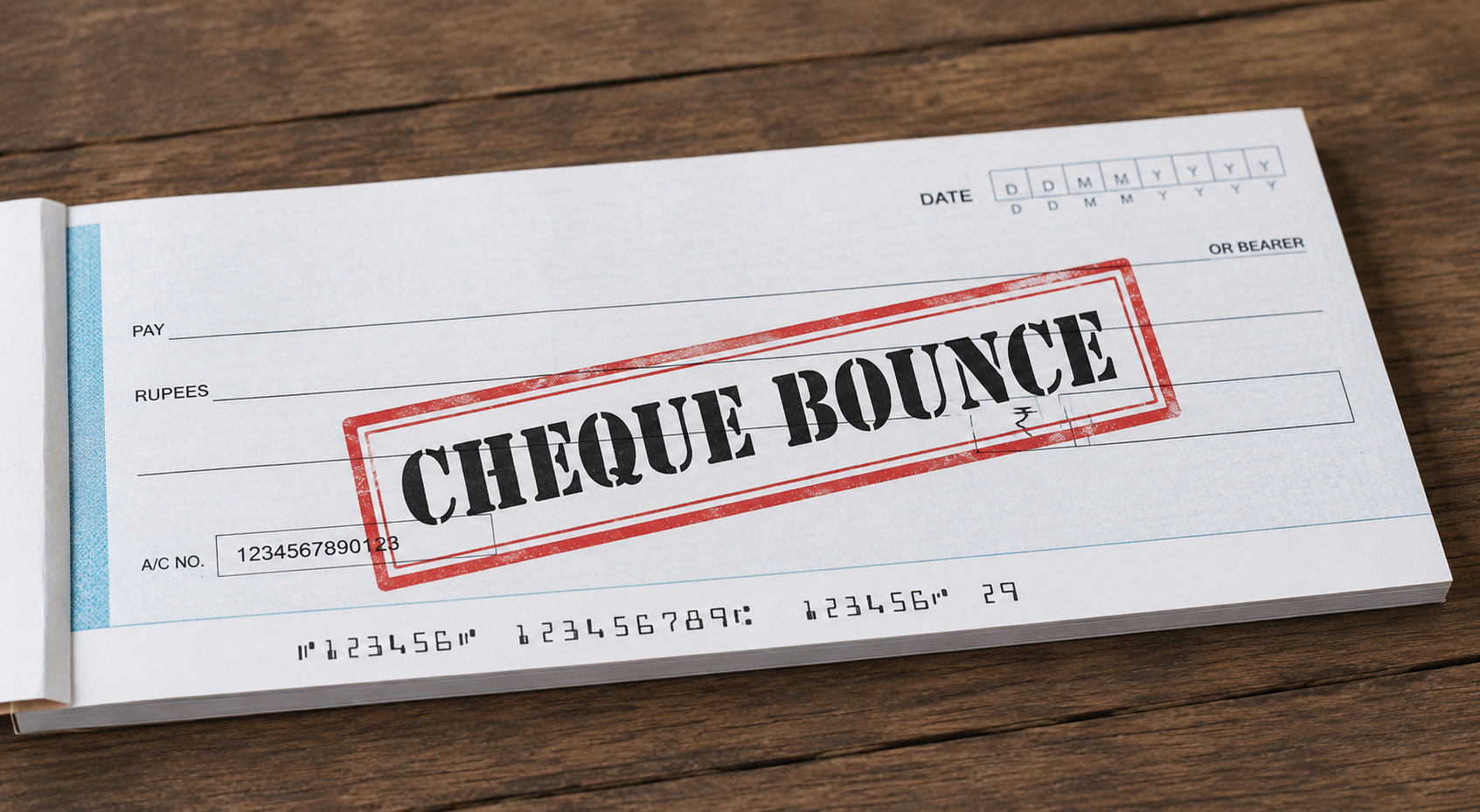
A cheque bounce due to insufficient funds is one of the most common financial disputes faced by individuals, businesses, traders, and companies in India. When a cheque issued by a person or organization is dishonoured by the bank because the account does not contain adequate balance, it can lead to serious legal and financial consequences under Indian law.
The law governing cheque bounce cases in India is primarily covered under Section 138 of the Negotiable Instruments Act, 1881. This provision was introduced to ensure financial discipline and to protect the credibility of cheque-based transactions. A dishonoured cheque not only affects business relationships but may also result in criminal proceedings against the issuer of the cheque.
What is a Cheque Bounce?
A cheque is considered bounced or dishonoured when the bank refuses to process the payment mentioned on the cheque. The most common reason is “insufficient funds,” which means the bank account of the cheque issuer does not have enough money to honour the payment.
Banks generally issue a “Cheque Return Memo” specifying the reason for dishonour. Common reasons include:
- Insufficient funds
- Signature mismatch
- Account closed
- Payment stopped by drawer
- Overwriting on cheque
- Expired or stale cheque
- Mismatch in cheque details
Among these, insufficient funds is the most common ground for initiating legal action under Section 138 of the Negotiable Instruments Act.
Legal Framework Under Section 138 NI Act
Section 138 of the Negotiable Instruments Act provides criminal liability for cheque dishonour due to insufficient balance. The objective of this law is to maintain trust in banking transactions and commercial dealings.
For a cheque bounce case to be legally valid under Section 138, the following conditions must be satisfied:
- The cheque must be issued for discharge of a legally enforceable debt or liability.
- The cheque must be presented within its validity period.
- The cheque must be dishonoured by the bank due to insufficient funds or similar reasons.
- The payee must send a legal demand notice within 30 days from the date of cheque dishonour.
- The drawer must fail to make payment within 15 days from receiving the legal notice.
If these conditions are fulfilled, the payee can file a criminal complaint before the competent magistrate court.
Legal Notice in Cheque Bounce Cases
A legal notice is an important step before filing a cheque bounce complaint. After receiving the cheque return memo from the bank, the payee must send a formal legal notice demanding payment from the cheque issuer.
The notice generally contains:
- Details of the cheque
- Amount involved
- Date of dishonour
- Reason for cheque return
- Demand for payment within 15 days
Failure to comply with the legal notice may result in criminal prosecution under Section 138 NI Act.
Punishment for Cheque Bounce Due to Insufficient Funds
If the court finds the accused guilty, the punishment may include:
- Imprisonment up to two years
- Monetary fine up to double the cheque amount
- Both imprisonment and fine
The court may also direct compensation to the complainant for financial losses suffered due to dishonour of the cheque.
Court Procedure in Cheque Bounce Matters
The legal process in cheque bounce cases usually involves the following stages:
1. Filing of Complaint
The complainant files a criminal complaint before the magistrate along with supporting documents.
2. Evidence Submission
Documents such as the original cheque, bank return memo, copy of legal notice, and proof of delivery are submitted.
3. Issuance of Summons
If the court is satisfied, summons are issued to the accused person.
4. Trial Proceedings
Both parties present evidence and arguments before the court.
5. Judgment
The court decides whether the accused is guilty and determines punishment or compensation.
Important Documents Required
The following documents are generally necessary in cheque bounce litigation:
- Original cheque
- Bank return memo
- Copy of legal notice
- Postal receipt or courier proof
- Reply to legal notice, if any
- Bank account statement
- Agreement or proof of liability
Proper documentation significantly strengthens the complainant’s case before the court.
Defences Available to the Accused
In some situations, the accused may defend the case on legal grounds such as:
- No legally enforceable debt existed
- Cheque was issued as security only
- Signature was forged
- Amount already paid
- Notice not properly served
- Material alteration in cheque
The success of these defences depends upon documentary evidence and court evaluation.
Impact of Cheque Bounce on Businesses
Cheque dishonour can severely affect businesses and commercial relationships. It may lead to:
- Loss of business credibility
- Financial disruption
- Delayed payments
- Legal expenses
- Damage to professional reputation
Businesses often prefer legal recovery proceedings to ensure timely payment and maintain financial discipline among clients and vendors.
Settlement in Cheque Bounce Cases
Many cheque bounce matters are resolved through settlement between parties before final judgment. Courts also encourage mediation and amicable settlement to reduce litigation burden.
Settlement may include:
- Full payment of cheque amount
- Payment in installments
- Additional compensation or interest
- Withdrawal of complaint after settlement
A properly drafted settlement agreement helps avoid future disputes.
Role of a Cheque Bounce Lawyer
An experienced cheque bounce lawyer plays a crucial role in:
- Drafting legal notices
- Filing complaints before court
- Preparing legal documentation
- Representing clients during trial
- Negotiating settlements
- Ensuring compliance with procedural timelines
Professional legal assistance improves the chances of effective recovery and successful litigation.
Conclusion
Cheque bounce due to insufficient funds is a serious legal matter in India that can result in criminal prosecution, financial penalties, and imprisonment under Section 138 of the Negotiable Instruments Act. Whether you are a business owner, professional, or individual, understanding the legal process and acting within prescribed timelines is extremely important.
Timely issuance of legal notice, proper documentation, and professional legal guidance can significantly strengthen your position in cheque dishonour cases. As cheque-based transactions continue to play an important role in commercial dealings, compliance with financial obligations remains essential to avoid legal complications and maintain business credibility.
