
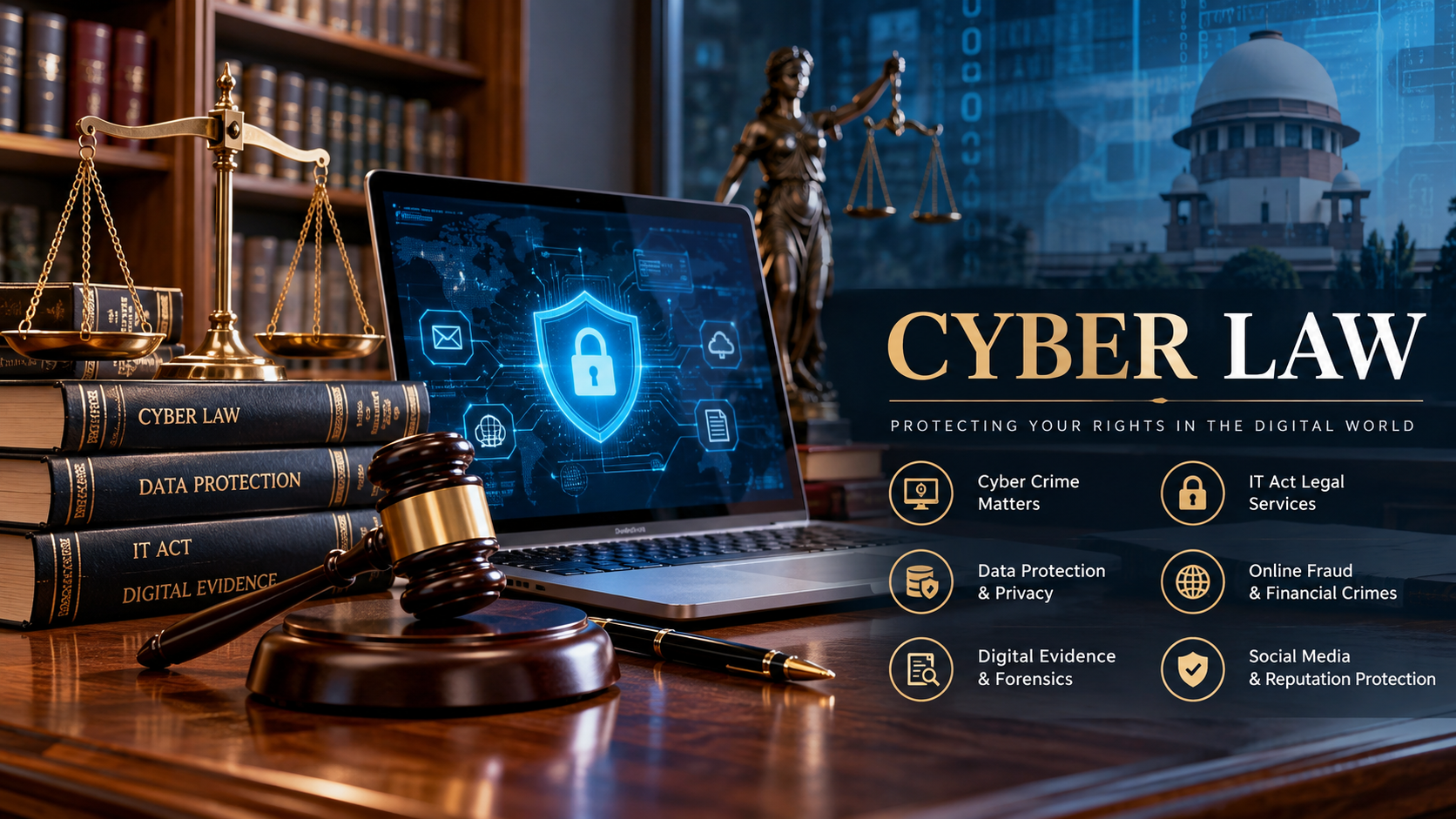
Cyber Law Digital technology has become an essential part of modern business, communication and everyday life. Along with its benefits, the increasing use of online platforms, digital transactions, electronic records and connected systems has created new legal and regulatory challenges.
Cyber Law deals with legal issues arising from the use of computers, digital networks, electronic communications, online platforms and other technology-driven activities. It can involve matters relating to cyber offences, data and privacy, electronic evidence, online transactions, digital fraud, intellectual property and regulatory compliance.
For individuals and organisations, understanding the legal implications of digital activity can be important for protecting rights, responding to incidents and managing technology-related risks.
What Is Cyber Law?
Cyber Law refers to the legal principles and regulatory provisions that apply to activities involving digital technology and cyberspace.
In India, cyber-related matters may involve multiple laws and regulatory frameworks depending on the nature of the issue. The Information Technology Act, 2000 is an important part of India’s legal framework for electronic records, electronic transactions and specified computer-related offences, while other legislation may also become relevant depending on the facts.
The legal position can vary significantly from one matter to another, making fact-specific legal assessment important.
Why Cyber Law Matters
Digital disputes can develop quickly and may involve technical evidence, electronic communications and multiple parties across different locations.
Cyber Law support can be relevant when dealing with:
- Online fraud and digital financial offences
- Unauthorised access to computer systems
- Data-related disputes
- Online impersonation
- Cyber harassment
- Misuse of digital information
- Electronic evidence
- Website and platform-related disputes
- Intellectual property infringement online
- Regulatory and compliance matters
The appropriate legal response depends on the nature of the incident, available evidence and applicable law.
Cyber Crime and Legal Remedies
Cyber incidents can take many forms. An individual may face online impersonation or financial fraud, while a business may encounter unauthorised access, misuse of confidential information or disruption involving digital systems.
A legal response may involve documenting the incident, preserving relevant electronic evidence, reporting the matter to the appropriate authority and pursuing available legal remedies.
It is important not to alter, delete or unnecessarily manipulate potentially relevant digital evidence. Screenshots, emails, transaction records, messages, URLs, device information and other relevant records may become important depending on the matter.
Cyber Fraud and Online Financial Offences
Digital payment systems and online financial services have made transactions more convenient, but they can also be misused for fraudulent activities.
Cyber-related financial disputes may involve unauthorised transactions, impersonation, phishing, deceptive communications or other forms of digital fraud.
Where an incident occurs, prompt action can be important. Relevant transaction records and communications should be preserved, and appropriate reporting channels should be considered based on the circumstances.
Legal counsel can assist in assessing the available remedies and coordinating the legal response.
Data Protection and Privacy
Businesses collect and process significant amounts of information through websites, applications, customer databases, employee systems and digital platforms.
This creates legal responsibilities relating to the collection, handling, storage, sharing and protection of information.
India’s Digital Personal Data Protection Act, 2023 introduced a dedicated framework concerning the processing of digital personal data. Organisations should assess their obligations based on the law and rules applicable to them and the nature of their data-processing activities.
Legal advisory can help organisations review privacy practices, contracts, internal processes and data-related responsibilities.
Electronic Evidence
Digital evidence can play an important role in cyber-related disputes and investigations.
Relevant material may include:
- Emails
- Chat messages
- Transaction records
- Server or system records
- Digital documents
- Website content
- Social media communications
- Photographs and screenshots
- Device-related information
The evidentiary value of electronic material depends on factors such as authenticity, integrity, relevance and the applicable procedural requirements.
Proper preservation and documentation of digital evidence can therefore be important from the beginning of a dispute.
Cyber Law and Businesses
Businesses can face cyber-related legal issues even when they are not directly involved in technology as their primary business activity.
Customer information, employee records, payment systems, cloud platforms, websites and third-party service providers can all create legal considerations.
Cyber Law advisory for businesses may include:
- Reviewing technology-related agreements
- Data protection and privacy compliance
- Incident-response considerations
- Confidentiality obligations
- Intellectual property protection
- Employee-related digital issues
- Vendor and service-provider contracts
- Online platform disputes
- Regulatory matters
A business-specific approach is generally more useful than relying on generic cybersecurity or privacy policies.
Online Defamation and Digital Content
The internet allows information to spread rapidly. False or unlawful online content can potentially affect individuals, professionals and businesses.
Depending on the facts, legal issues may arise from social media posts, websites, online reviews, videos, messages or other forms of digital publication.
Before taking legal action, it is important to preserve the relevant content and document where and when it appeared. The appropriate remedy will depend on the nature of the statement, the parties involved and the applicable law.
Intellectual Property and the Digital Environment
Copyright, trademarks and other intellectual property rights can be affected by online activity.
Unauthorised copying of website content, misuse of brand names, reproduction of photographs, distribution of protected material and other forms of digital infringement can create legal concerns.
Legal advice can assist rights holders in assessing infringement, documenting the issue and considering appropriate remedies.
Cyber Contracts and Technology Agreements
Technology-related business relationships often depend on contracts. Agreements with software providers, cloud-service companies, digital platforms, consultants and other technology vendors may contain important provisions concerning data, confidentiality, intellectual property, liability and termination.
Legal review before signing such agreements can help identify obligations and risks that may otherwise be overlooked.
Cyber Compliance for Organisations
Cyber-related compliance should not be viewed only as a technical issue. Depending on the organisation and its activities, legal considerations may affect privacy notices, contracts, internal policies, employee practices, data handling and incident response.
A legal compliance review can help organisations understand which obligations apply to their particular operations and where documentation or contractual improvements may be required.
Cyber Disputes and Litigation
When a cyber-related issue develops into a dispute, litigation may involve both legal and technical questions.
The strategy may require analysis of electronic evidence, contractual obligations, statutory provisions, jurisdictional considerations and available remedies.
Depending on the dispute, appropriate proceedings may involve courts, tribunals, regulatory authorities or other legally recognised forums.
Early legal assessment can help determine which evidence should be preserved and which remedies may be available.
Why Timely Legal Advice Matters
Cyber incidents often involve information that can disappear, change or become difficult to retrieve. Delays may therefore complicate evidence preservation and legal action.
Obtaining legal guidance at an early stage can help an individual or organisation understand the available options, identify relevant evidence and take appropriate procedural steps.
At the same time, not every technical incident necessarily requires litigation. In some matters, a carefully structured legal notice, negotiation, internal investigation or regulatory response may be more appropriate.
Frequently Asked Questions
What does Cyber Law cover?
Cyber Law can cover cyber offences, electronic evidence, digital transactions, data protection, online disputes, technology contracts, intellectual property issues and other legal matters involving digital activity.
Is Cyber Law limited to cybercrime?
No. Cyber Law is broader than cybercrime. It can also involve privacy, electronic records, contracts, online content, intellectual property and regulatory compliance.
Can businesses seek Cyber Law advice?
Yes. Businesses may require legal support for data protection, technology contracts, digital disputes, cyber incidents, online content and compliance matters.
What should I do after a cyber incident?
Preserve relevant evidence, secure affected accounts or systems where appropriate, maintain records of the incident and consider reporting it through the appropriate channels. Legal advice may help determine the next steps based on the circumstances.
Is digital evidence legally useful?
Electronic records can be relevant evidence, but their admissibility and evidentiary value depend on applicable legal and procedural requirements as well as factors such as authenticity and integrity.
Conclusion
Cyber Law has become increasingly relevant as individuals, businesses and institutions rely on digital systems for communication, transactions and information management. Cyber-related legal issues can involve technology, evidence, contracts, privacy, intellectual property and regulatory obligations at the same time.
Whether the matter concerns online fraud, data protection, electronic evidence, digital content, technology agreements or a cyber-related dispute, a careful legal assessment can help identify the relevant law and available options.
For organisations, proactive legal review can also help address technology-related contractual and compliance responsibilities before a dispute or incident occurs. For individuals facing a cyber-related problem, timely preservation of evidence and appropriate legal guidance can be equally important.
