
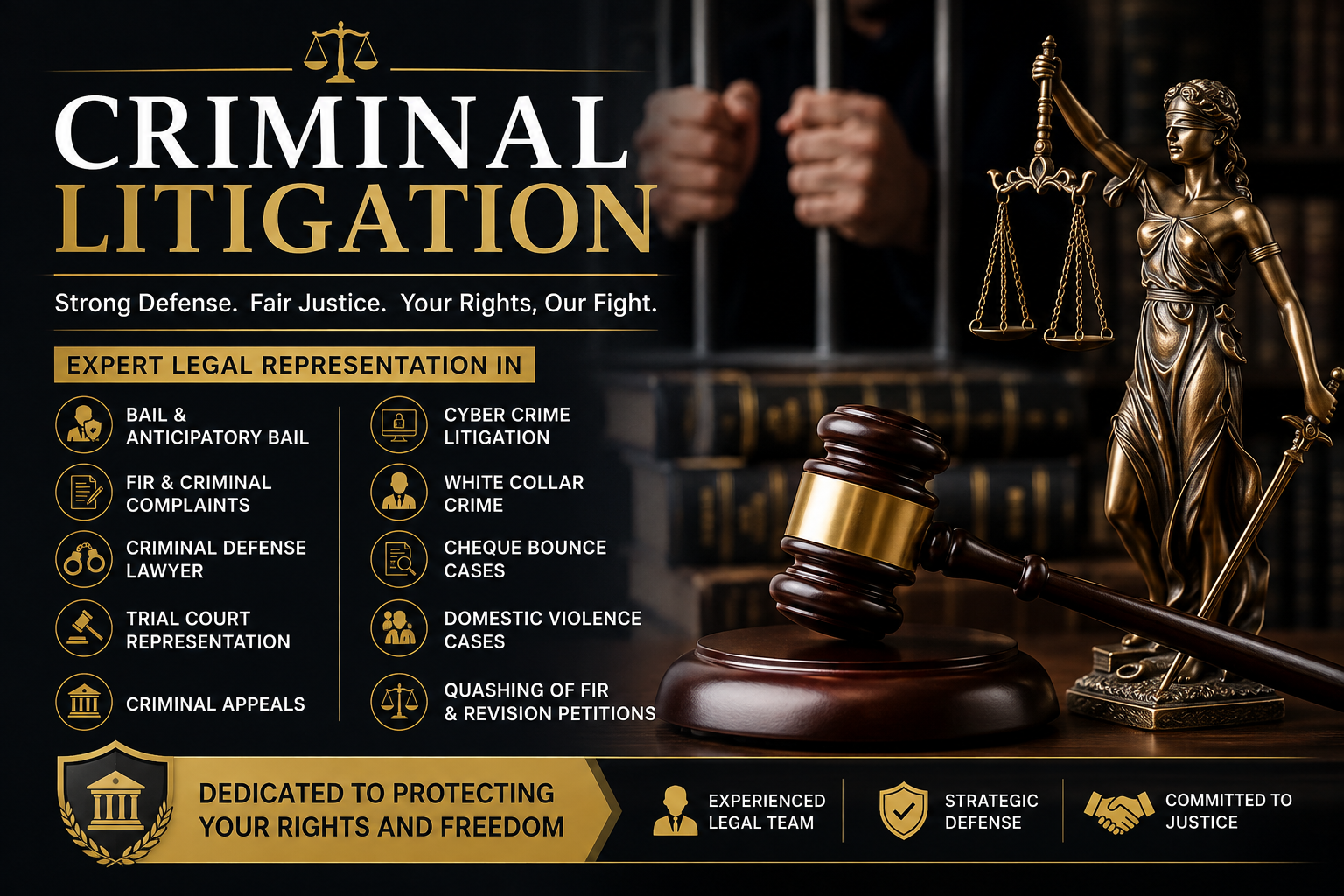
Criminal litigation is an important area of legal practice that deals with cases involving alleged violations of criminal law. It covers the legal process from the initial stage of investigation and registration of a criminal case through trial, evidence, arguments, and final judgment. Criminal proceedings can have serious consequences for an individual’s liberty, reputation, employment, family life, and future. Therefore, timely and appropriate legal representation is essential for protecting legal rights and ensuring that the case is presented effectively before the appropriate court.
A criminal litigation lawyer assists individuals, businesses, and other parties involved in criminal proceedings by providing legal advice, preparing the necessary documents, appearing before courts, examining the available evidence, and presenting appropriate legal arguments. Each criminal matter has its own facts and circumstances, making a careful assessment of the case particularly important.
Understanding Criminal Litigation
Criminal litigation generally begins when an allegation of a criminal offence is reported to the authorities. Depending on the nature of the allegations, the matter may involve investigation, registration of an FIR, arrest, questioning, collection of evidence, filing of a charge sheet, and subsequent court proceedings.
The accused is entitled to legal representation and a fair opportunity to present a defence in accordance with applicable law. A criminal lawyer works to ensure that procedural safeguards are respected and that the case is handled through proper legal channels.
Criminal litigation may involve matters ranging from comparatively less serious offences to complex cases involving multiple accused persons, substantial evidence, financial transactions, electronic records, or serious allegations.
Role of a Criminal Litigation Lawyer
A criminal litigation lawyer plays an important role throughout different stages of a criminal proceeding. The lawyer first examines the allegations, available documents, relevant facts, and applicable legal provisions. Based on this assessment, appropriate legal remedies and strategies can be considered.
Legal representation may involve drafting applications and petitions, appearing before the police or courts where legally appropriate, seeking bail, challenging procedural irregularities, examining evidence, cross-examining witnesses, and presenting arguments.
A lawyer may also explain the possible legal consequences of different steps and help the client make informed decisions during the proceedings.
Criminal Cases and FIR Proceedings
An FIR can be a significant starting point in many criminal matters. The contents of an FIR may influence the subsequent investigation and court proceedings. Legal advice at an early stage can therefore be valuable in understanding the allegations and identifying appropriate remedies.
Depending on the circumstances, legal proceedings may involve regular bail, anticipatory bail, petitions seeking appropriate relief, or other remedies available under applicable law. The exact remedy depends on the facts, nature of the alleged offence, stage of proceedings, and applicable statutory provisions.
Bail and Anticipatory Bail
Bail is an important aspect of criminal litigation. A person facing arrest or already arrested may have legal remedies available depending on the circumstances of the case.
Regular bail generally concerns a person who has already been arrested, while anticipatory bail may be sought in appropriate circumstances when a person has reason to believe that they may be arrested in connection with a non-bailable offence.
Applications for bail require careful preparation. The court may consider various factors, including the nature and seriousness of the allegations, circumstances of the accused, evidence available at the relevant stage, possibility of cooperation with investigation, and other factors recognized by law.
Criminal Trial and Court Proceedings
Criminal trials involve several stages and require detailed preparation. Depending on the case, proceedings may include consideration of the charge sheet, framing of charges, examination of prosecution witnesses, cross-examination, presentation of defence evidence where applicable, statements of the accused, final arguments, and judgment.
During trial, the lawyer carefully examines the evidence presented by the prosecution and tests the reliability and relevance of witness testimony and documentary or electronic evidence. Appropriate legal objections and arguments may be raised wherever necessary.
Effective courtroom representation requires an understanding of both substantive criminal law and procedural requirements.
Evidence in Criminal Litigation
Evidence can play a decisive role in criminal proceedings. Criminal cases may involve documentary records, witness statements, medical records, forensic material, CCTV footage, electronic communications, financial documents, digital devices, and other forms of evidence.
A criminal lawyer examines the manner in which evidence was collected, preserved, documented, and presented before the court. The relevance, admissibility, authenticity, and reliability of evidence may become important issues during the proceedings.
Digital evidence has become increasingly relevant in modern criminal cases. Electronic records and communications may require careful legal and technical examination before they can be effectively relied upon in court.
Cross-Examination of Witnesses
Cross-examination is a significant part of many criminal trials. Through careful questioning, the defence may test the consistency, credibility, accuracy, and reliability of a witness’s testimony.
Effective cross-examination requires detailed knowledge of the case record and careful comparison of statements made at different stages. Contradictions, omissions, inconsistencies, or other relevant aspects of testimony may be addressed in accordance with the applicable rules of evidence and procedure.
Criminal Appeals and Revision
A criminal matter does not necessarily end with the initial judgment. Depending on the applicable law and circumstances, a party may have the right to challenge a judgment or order through an appeal, revision, or another appropriate legal remedy.
Criminal appellate proceedings require careful examination of the trial court record, evidence, findings, and legal reasoning. A lawyer may identify errors of law, procedural irregularities, evidentiary issues, or other grounds that may be relevant to the challenge.
Quashing of Criminal Proceedings
In appropriate cases, legal remedies may be available to seek quashing of criminal proceedings or an FIR. Such proceedings involve specific legal principles and are generally considered on the basis of the allegations, available material, and circumstances of the case.
The availability of such a remedy depends on the facts and applicable law. A detailed review of the case is therefore necessary before determining whether such relief may be pursued.
Cybercrime and Digital Criminal Matters
The increasing use of technology has resulted in the emergence of complex cybercrime-related disputes. Criminal litigation may involve allegations concerning online fraud, identity theft, unauthorized access, cyber harassment, digital financial fraud, misuse of electronic communications, and other technology-related offences.
These matters may involve electronic evidence and require careful coordination between legal analysis and technical information. Proper handling of digital records can be important for both prosecution and defence.
Financial and Economic Offences
Criminal litigation may also involve allegations concerning financial transactions, fraud, cheating, forgery, breach of trust, corruption, money laundering, and other economic offences.
Such cases can involve extensive documentation, banking records, business transactions, digital communications, and multiple parties. Legal representation in these matters requires detailed examination of the transaction history and the applicable legal provisions.
Importance of Timely Legal Assistance
Seeking legal assistance at an early stage can help an individual understand the nature of the allegations and available legal remedies. Early legal review may also help in organizing documents, preserving relevant information, understanding procedural developments, and preparing an appropriate response.
Every criminal case is fact-specific. The appropriate legal strategy depends on the allegations, evidence, procedural stage, applicable law, and circumstances of the individual matter.
Professional Criminal Litigation Services
Professional criminal litigation services focus on providing structured legal assistance throughout the course of criminal proceedings. This may include legal consultation, case assessment, drafting of petitions and applications, bail representation, trial advocacy, evidence analysis, cross-examination, appellate representation, and other litigation support.
A well-prepared criminal defence requires careful attention to facts, evidence, procedure, and applicable law. Effective representation aims to protect the legal rights of the client while ensuring that the proceedings are addressed through appropriate judicial processes.
Conclusion
Criminal litigation involves complex legal procedures and can significantly affect the individuals and organizations involved. From FIR proceedings and investigation to bail, trial, evidence, judgment, and appellate remedies, each stage requires careful legal attention.
Experienced legal representation can help clients understand their rights, available remedies, procedural requirements, and potential legal options. Whether a matter involves allegations of a conventional criminal offence, cybercrime, financial misconduct, or another serious allegation, a structured and legally informed approach is essential.
Because criminal matters are highly dependent on their individual facts and applicable law, professional legal advice should be obtained before taking significant steps in any criminal proceeding.
