
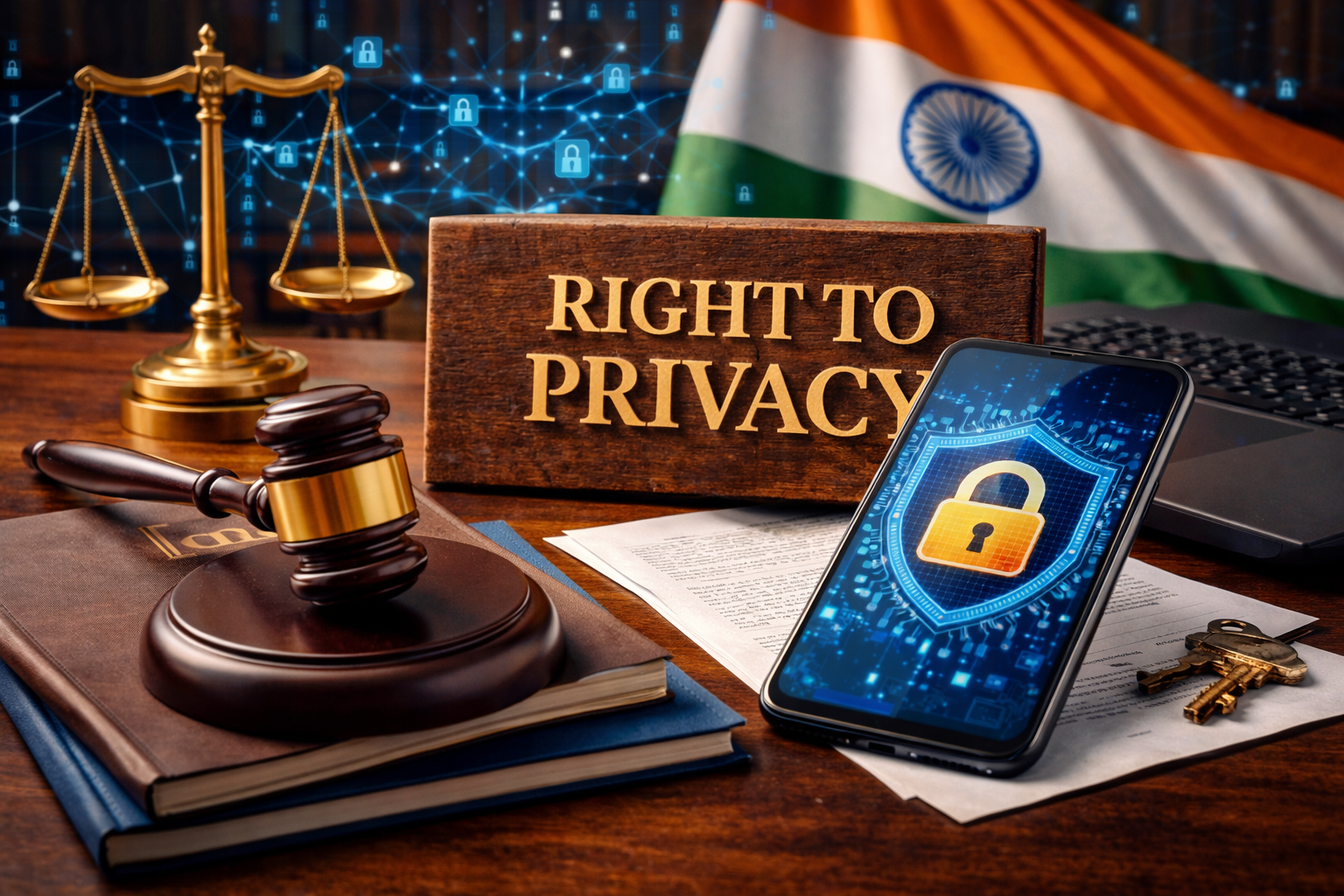
In today’s digital world, our personal information is constantly being shared — from social media accounts to online shopping, banking, and even smart devices at home. But do you know that in India, you have a constitutional right to privacy, and recent laws are aimed at protecting you online? Understanding these rights is essential for every citizen to ensure their data and personal information remain secure.
This blog explains:
-
What is the Right to Privacy?
-
Landmark judgments shaping privacy law
-
Key recent laws protecting privacy
-
How these laws affect your online life
-
Common threats to privacy
-
Tips to protect your personal information
-
Future of privacy law in India
1. What Is the Right to Privacy?
The Right to Privacy means you have the right to control your personal information, and no one — including the government, companies, or even relatives — can misuse it without your consent.
In India, the Supreme Court recognized privacy as a fundamental right in 2017 through the landmark case Justice K.S. Puttaswamy v. Union of India. This means privacy is protected under Article 21 (Right to Life and Personal Liberty) of the Indian Constitution.
Privacy is not just about keeping secrets; it includes financial details, medical records, online activity, and even personal choices.
2. Landmark Judgments Shaping Privacy Law
Several court cases have reinforced privacy as a fundamental right:
Justice K.S. Puttaswamy Case (2017): The Supreme Court confirmed privacy is a fundamental right. This ruling protects individuals against illegal surveillance, data misuse, and intrusive laws.
Aadhaar Verdict (2018): The Court allowed the government to use Aadhaar for welfare programs but emphasized strict data protection and limited use of personal information.
WhatsApp & Data Sharing Cases: The courts are now focusing on how companies collect, share, and store user data, emphasizing transparency and consent.
These decisions have shaped the legal framework for personal data protection in India, giving citizens stronger control over their information.
3. Key Recent Laws Protecting Privacy
Several laws have been introduced to strengthen online privacy:
a) Information Technology (IT) Act, 2000 & IT Rules
The IT Act and subsequent rules regulate digital platforms, online communication, and data breaches. Companies must now follow strict cybersecurity measures and report any data leaks or unauthorized access.
b) Digital Personal Data Protection Act, 2023
This is a recent and important law that requires:
Companies to obtain explicit consent before collecting personal data
Individuals to have the right to access, correct, or delete their data
Platforms to store data securely and prevent misuse
Violating these rules can lead to penalties, fines, or legal action.
c) Telecom Regulatory Authority of India (TRAI) Guidelines
TRAI ensures telecommunication companies protect user information, especially in mobile apps, call records, and messaging services.
4. How These Laws Affect Your Online Life
These privacy laws impact citizens in multiple ways:
Social Media: Platforms like Instagram, Facebook, and Twitter must obtain consent for personal data and cannot share it without permission.
Online Shopping: E-commerce websites must protect your payment details and addresses.
Messaging Apps: Apps like WhatsApp must secure chats and user data under IT laws.
Government Portals: Aadhaar and other identity systems must limit data sharing only to approved purposes.
Essentially, your online actions are now legally protected, and companies cannot misuse your personal information without your knowledge.
5. Common Threats to Privacy
Even with laws in place, your privacy can be at risk due to:
Data Breaches: Hackers stealing personal information from apps or websites
Unlawful Surveillance: Unauthorized government or private monitoring
Phishing & Scams: Fraudsters tricking you into sharing personal details
Uninformed Consent: Clicking “Agree” without reading privacy policies
Social Media Exposure: Sharing personal life details publicly without knowing who can access it
Awareness is crucial because laws protect you, but cautious behavior keeps you safe.
6. Tips to Protect Your Personal Information
Here are some simple steps to maintain your privacy online:
-
Use Strong Passwords: Avoid easy passwords; include numbers, letters, and symbols
-
Enable Two-Factor Authentication: Adds extra security for email and apps
-
Read Privacy Policies: Know how apps and websites handle your data
-
Limit Social Media Sharing: Only share what is necessary; adjust privacy settings
-
Update Software Regularly: Security patches help prevent hacking
-
Be Careful With Public Wi-Fi: Avoid banking or sensitive actions on open networks
-
Use Encrypted Communication: Apps like Signal provide end-to-end encryption
7. Future of Privacy Law in India
India is moving toward comprehensive data protection, similar to the EU’s GDPR (General Data Protection Regulation). Experts predict:
Stricter rules for AI-based platforms, digital advertising, and social media algorithms
More focus on children’s and minors’ data protection
Increased government and corporate accountability for data misuse
Greater citizen awareness campaigns on digital rights
This means in the coming years, privacy will not just be a legal right but also a social expectation for all digital users.
Conclusion
The Right to Privacy in India is no longer just a theoretical concept; it’s a practical right that affects every citizen’s online life. With recent laws like the Digital Personal Data Protection Act 2023, IT rules, and Supreme Court judgments, individuals now have the tools to control their personal information, secure online activity, and demand accountability from platforms and service providers.
Being aware of your rights, understanding privacy threats, and following basic security measures ensures you can navigate the digital world safely and legally.
Your privacy is your right — and the law in India is working to make sure it stays protected.
